


Why Diet and Exercise Stop Working in Your 40s (And What Actually Moves Stubborn Fat)
Hormones, cortisol, and the real story behind the last 10 pounds — plus the targeted tools that finally move stubborn fat after 40.
You are eating the same way. You are training the same way. You may be training harder. The mirror is showing you something else.
This is the most common conversation we have with women in their 40s and early 50s — high-functioning, disciplined, frustrated. The discipline isn't the problem. The biology shifted. Here is what changes, why it changes, and what actually moves stubborn fat after 40.
What's actually happening in your 40s
Three shifts converge between the late 30s and mid-50s. None of them are pathological — they are the normal arc of perimenopause and metabolic aging.
1. Estrogen decline → fat redistributes
Estrogen helps direct where the body stores fat. As it declines through perimenopause, fat that previously stored in the hips, thighs, and butt starts to redistribute to the abdomen — the visceral and subcutaneous belly. You can be the same weight on the scale and a different shape in the mirror.
2. Cortisol gets louder
The same demanding career that built your competence is also the one keeping cortisol elevated. Chronically elevated cortisol promotes abdominal fat storage and makes the body resistant to the catabolic signals from exercise. The body holds on to fat as a safety reserve.
3. Muscle mass quietly declines
Without intentional resistance training, women lose roughly 3–5% of muscle per decade after 30. Lower muscle mass means lower resting metabolic rate, which means the same calories that maintained you at 35 now slowly add weight at 45. Less engine, same fuel.

What actually moves the needle
The frustrating truth: most of the standard advice ("eat less, move more") was calibrated for a younger body. After 40, the leverage points shift.
The things that work on overall fat
- Heavy resistance training, 3–4×/week. Not bodyweight, not pilates-only — progressively loaded resistance training to preserve and build muscle.
- Protein, 0.8–1g per pound of goal bodyweight. Most women in this stage are eating roughly half what they need.
- Sleep, ruthlessly protected. Cortisol and growth hormone are regulated overnight. Six hours doesn't cut it.
- Stress de-escalation tools — not "self-care," recovery infrastructure. Walking, breathwork, time away from devices.
- Cycle-aware fueling. Especially in perimenopause, energy availability matters more than restriction.
What it won't touch
Even with all of the above dialed in, one or two pockets will usually survive: the lower belly, the flanks, the inner thigh, and (increasingly on camera) the under-chin. These zones store fat for evolutionary reasons that don't care about your training program.
This is where targeted, non-invasive contouring earns its place.
Where CryoLipo fits
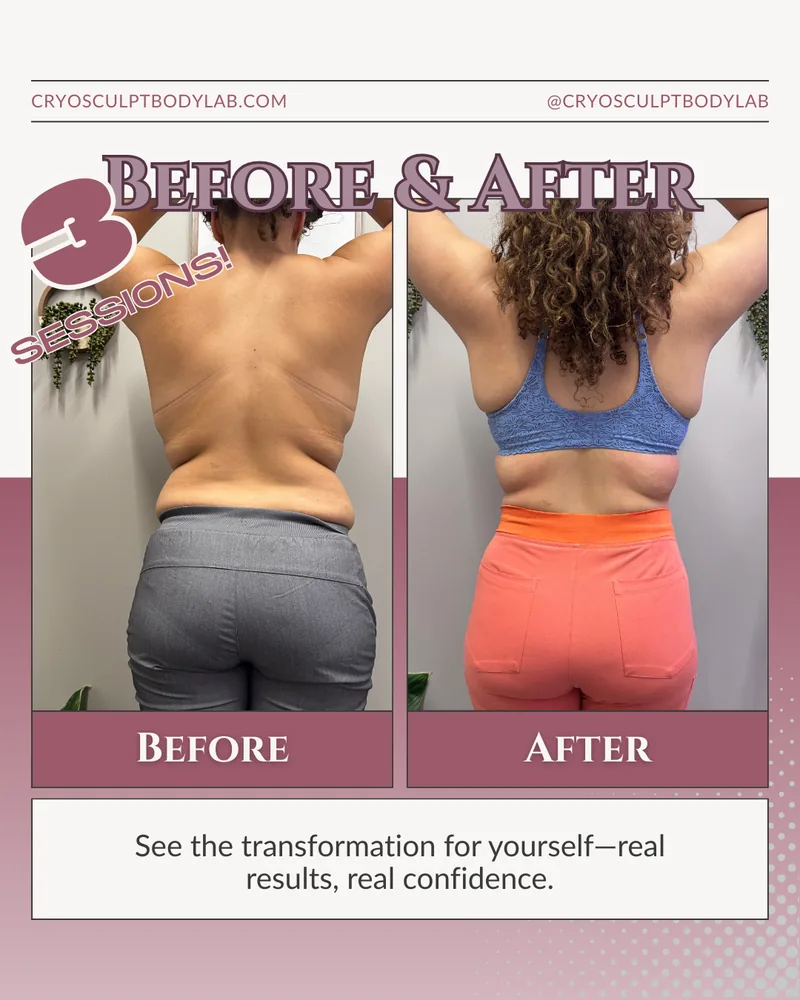
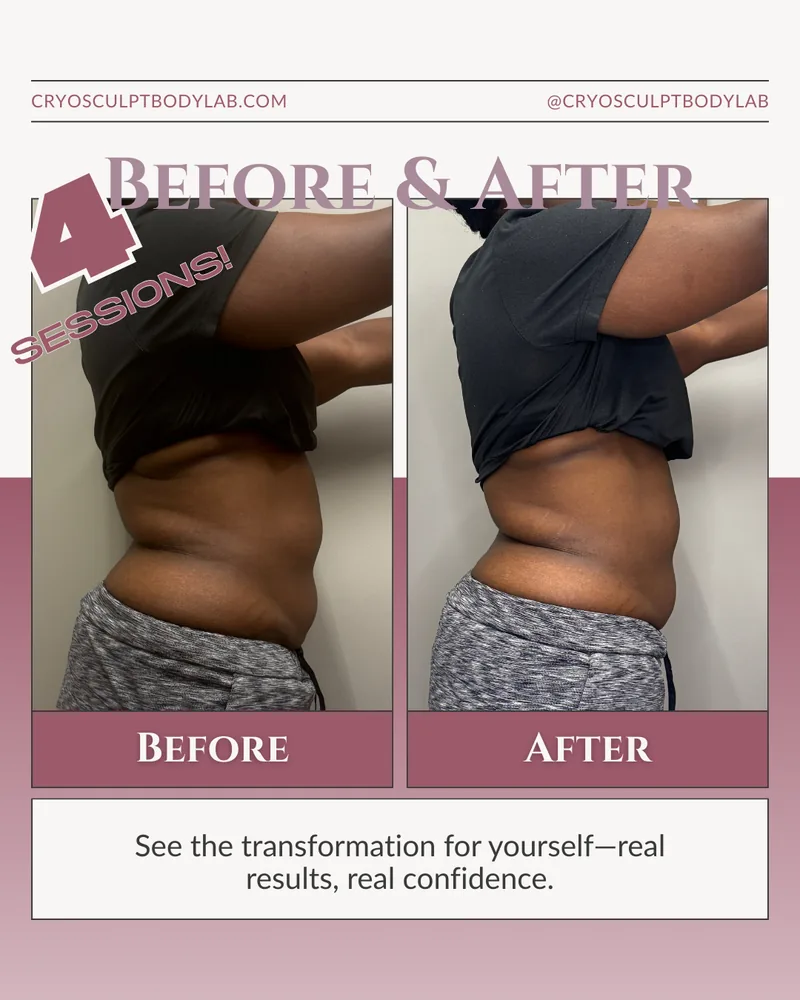
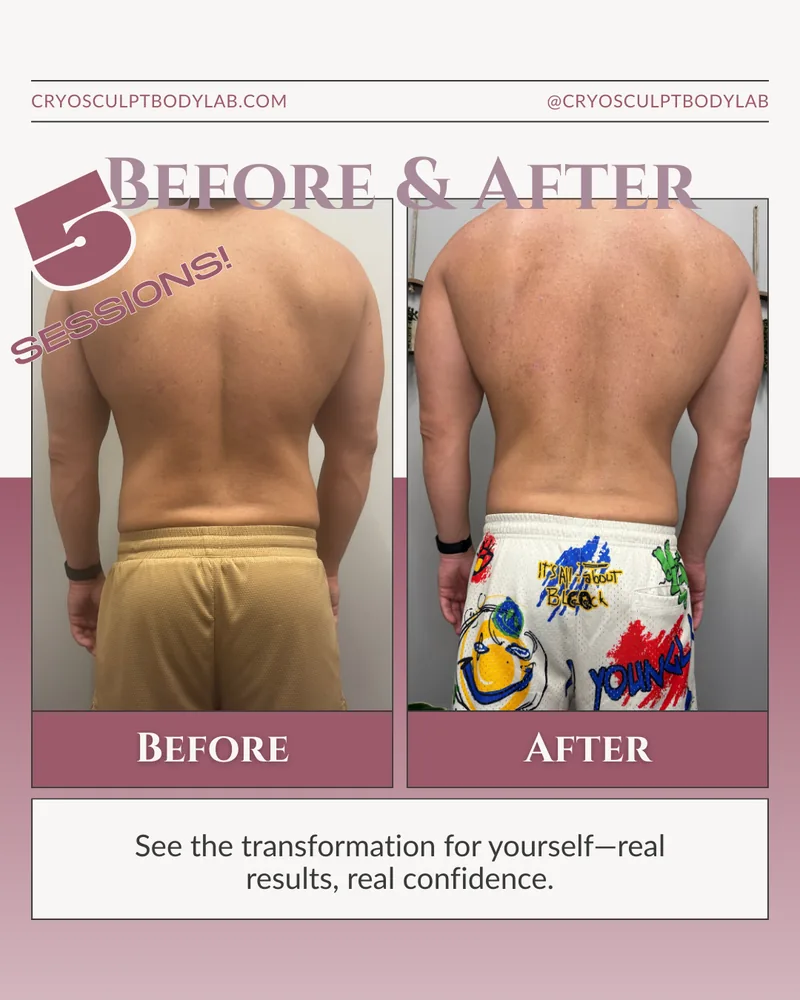
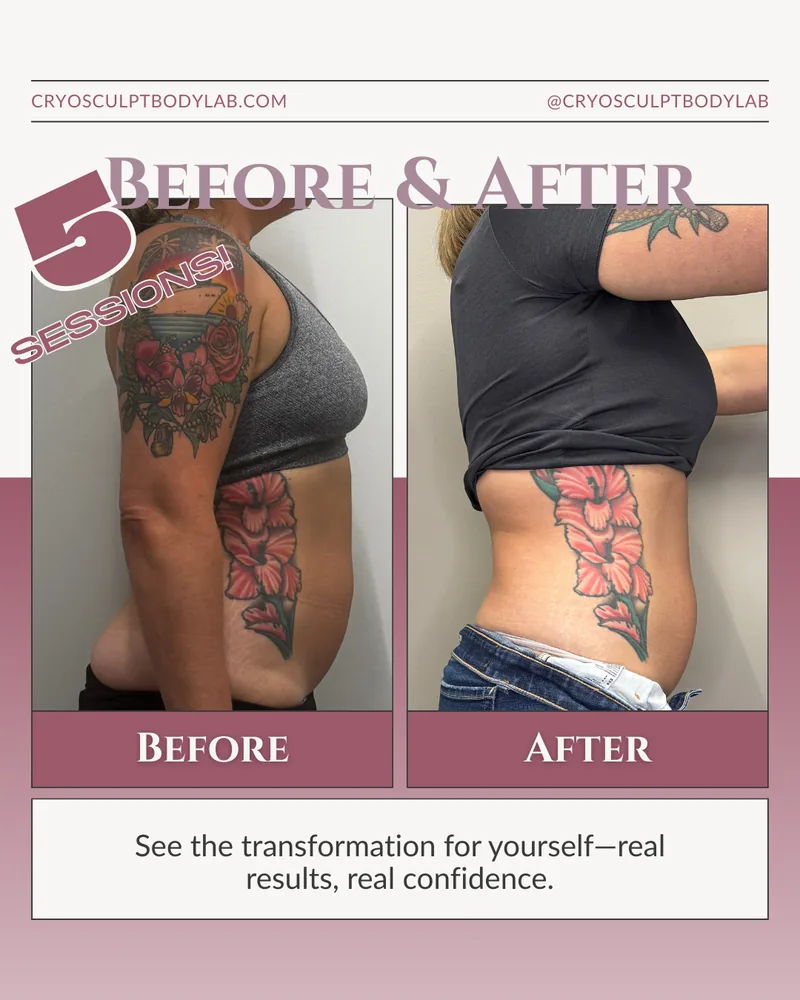
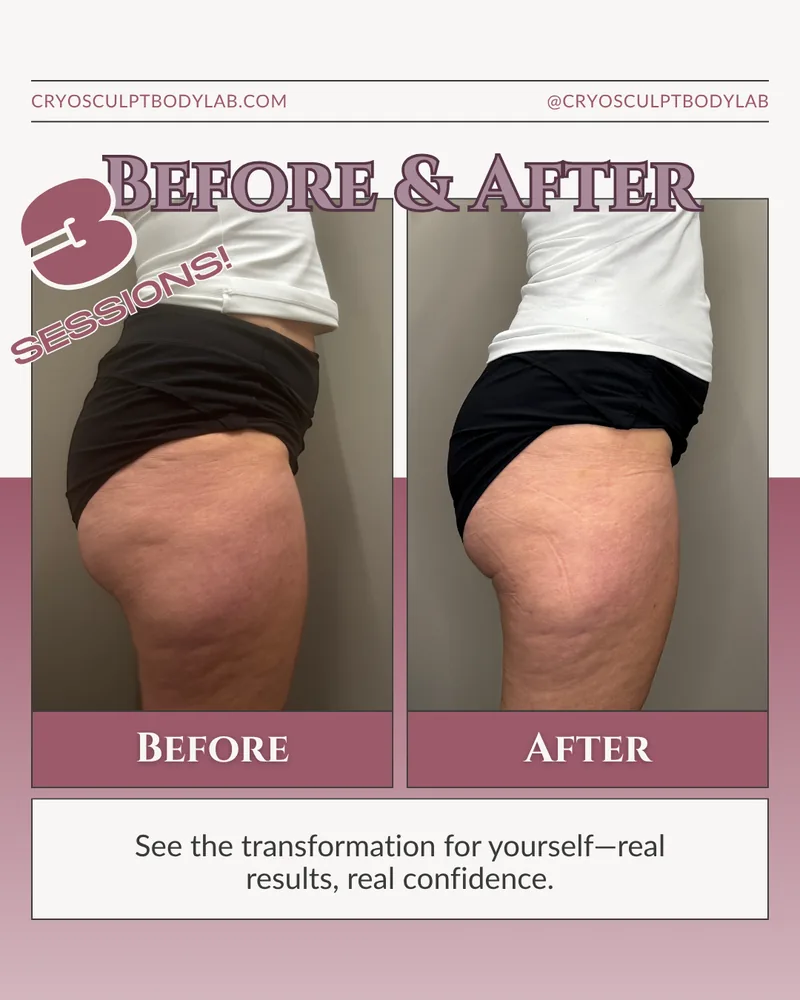
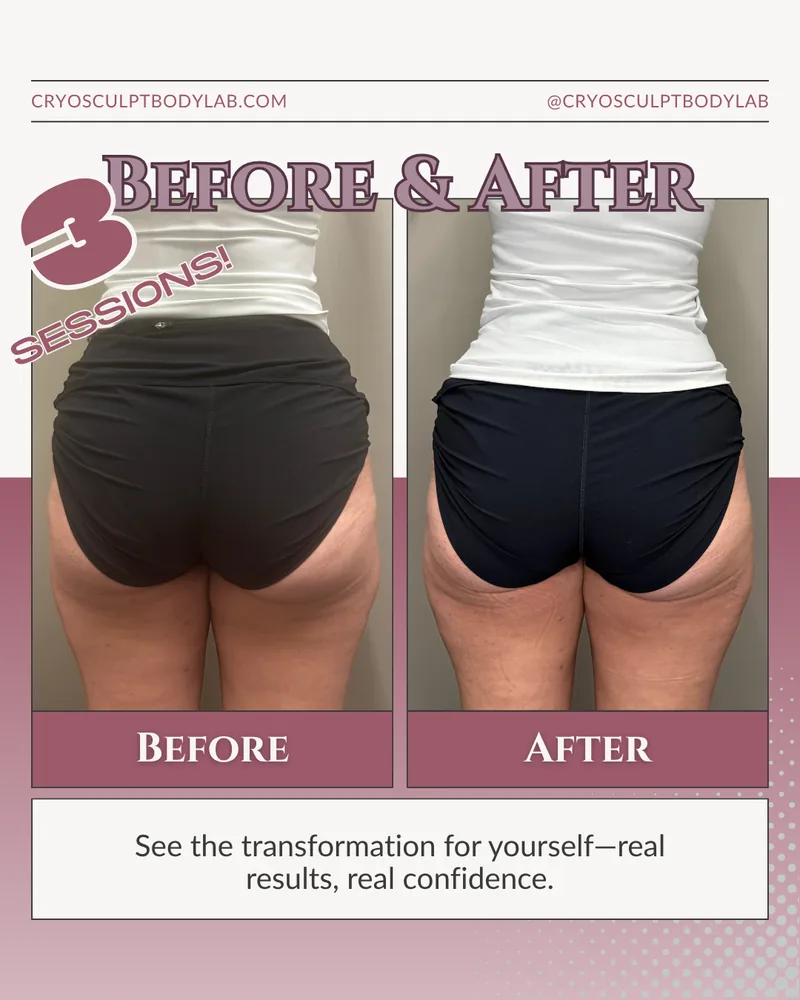
CryoLipo is not a weight-loss tool. It does not help with the redistribution, the cortisol, or the muscle decline. What it does — well, and specifically — is target the fat cells in a single zone and reduce that pocket over 6–12 weeks. The cleared fat is processed through the lymphatic system; the cells are gone for good.
For a woman who is already doing the work, this is the layer that finishes the picture. Lower belly that won't flatten despite 4am workouts. Flanks that spill over the waistband by 3pm. The inner thigh that chafes in the same dress that fit last year. Targeted contouring isn't a shortcut around the work — it's the tool that finally moves the inch the work can't.
The pinch test
A quick way to tell whether you're working with the right tool:
- Can you pinch the fat between your fingers? That's subcutaneous fat — a good CryoLipo candidate.
- Is it firm and tense, with the belly distending forward? That's likely visceral fat (around the organs). Visceral fat does not respond to contouring; it responds to sleep, stress, and metabolic work.
- Is it loose and crinkly with very little fat underneath? That's skin laxity from weight loss or aging, not a fat-reduction problem.
The bottom line
The frustration of doing everything right and seeing nothing change isn't a willpower problem. It's a biology problem that needs a different set of tools at this stage. Build the foundation — resistance training, protein, sleep, stress recovery. Then, for the one or two pockets that survive that foundation, a targeted CryoLipo plan is the lever that actually moves them.
Curious whether your zone is a good candidate? [Book a complimentary consultation](/complementary-consultation) — we'll do the pinch test in person and tell you honestly whether contouring or another path makes more sense.
Next step
Book a free 20-minute consultation
We'll look at your areas, answer your questions, and tell you honestly whether CryoLipo is the right tool for your goals.